
Overview
About this event
The Annual Meeting of the Association for Computational Linguistics is the flagship conference of the ACL, the principal scientific and professional society for people working on computational approaches to natural language. First held in 1963, the conference has grown from a small gathering of machine translation researchers into one of the most competitive and widely attended venues in AI and natural language processing, attracting thousands of researchers and practitioners from institutions around the world.
ACL 2026 is the 64th edition and is hosted in San Diego, California. The conference follows a strict rotation system: Europe in years divisible by three, North America in years with remainder one, and Asia-Australia in years with remainder two. 2026 falls in the North America slot, placing the conference in San Diego after the 2025 edition in Vienna, Austria. Full details are on the ACL 2026 official website.
The conference covers the full breadth of computational linguistics and NLP research, spanning language understanding, language generation, machine translation, information extraction, dialogue systems, multimodal language processing, language model evaluation, speech and language, and the growing intersection of large language models with every dimension of the discipline.
What Usually Happens at ACL?
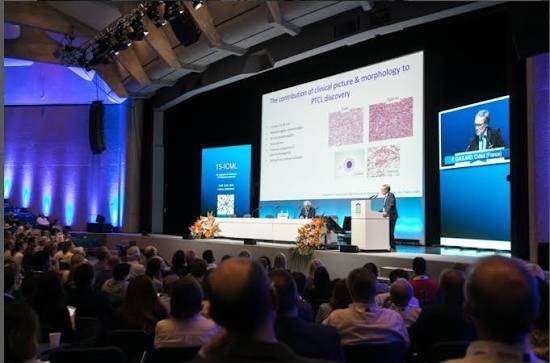
ACL runs across six days with a structured programme that moves from tutorials and workshops to the main technical conference. Tutorials on July 2 provide deep-dives into specialised or emerging research areas. Workshops on July 3 and 4 cover focused sub-topics with their own paper submissions, invited speakers and panel discussions. The main conference from July 5 to 7 features oral presentations, poster sessions, system demonstrations, the industry track, the Student Research Workshop and panel discussions.
Social events run alongside the programme, including a Welcome Reception and a dedicated Social Event. The ACL Anthology, the open-access archive of computational linguistics and NLP publications, hosts all accepted papers at aclanthology.org. All papers accepted to the main conference must be presented in person or virtually by at least one author.
When Is ACL 2026 Taking Place?
ACL 2026 runs July 2 to 7, 2026, at the Manchester Grand Hyatt San Diego, California. The conference is hybrid with in-person and virtual participation available for all sessions. Registration is open at the ACL 2026 registration page. In-person capacity is capped at 3,500 attendees per day and is expected to sell out: ACL 2025 in Vienna had over 5,000 in-person attendees.
ACL 2026: Latest Updates
7 topicsACL 2026 is confirmed and registration is open. Here is everything announced from the official ACL 2026 website and the ACL Member Portal.
Registration Now Open: Capacity Capped at 3,500 Per Day
Registration for ACL 2026 opened on April 21, 2026. The Manchester Grand Hyatt San Diego has a maximum capacity of 3,500 in-person attendees per day. ACL 2025 in Vienna had over 5,000 in-person attendees and the venue was contracted before that growth, so organisers have warned the conference is very likely to sell out quickly. Those planning to attend in person are strongly encouraged to register early. Onsite registration starting July 1 is unlikely to be available for the main conference and may only be available for workshops and tutorials.
ACL Statement on Hallucinated References
The ACL 2026 programme chairs issued a formal statement that papers containing hallucinated references will be desk rejected. This applies across all submission tracks and reflects a broader effort by the NLP community to address the risks of AI-assisted writing in academic submissions. The full statement is in the ACL statement on hallucinated references.
Tutorial List Published
The list of accepted tutorials for ACL 2026 was published on May 2, 2026. Tutorials run on July 2, the day before workshops begin, and cover specialised and emerging research areas in computational linguistics and NLP. See the full ACL 2026 tutorial list.
Workshop List Published
The list of accepted workshops for ACL 2026 was published on April 9, 2026. Workshops run July 3 and 4 at the Manchester Grand Hyatt San Diego. See the full ACL 2026 workshop list.
Call for Shared Interest and Affinity Group Events
A call for shared interest and affinity group events was issued on May 8, 2026, inviting Special Interest Groups, affinity groups and community organisations within the ACL ecosystem to organise events during the conference week. Applications and details are on the shared interest and affinity group events call.
Diversity and Inclusion and Virtual Subsidies Available
ACL 2026 offers two subsidy programmes to support participation. D&I subsidies offset registration and travel costs for participants from underrepresented backgrounds or low-income regions, with applications due May 15, 2026. Virtual subsidies cover virtual registration costs for eligible participants, with applications due June 6, 2026. Details are on the ACL 2026 calls for papers and participation.
Volunteer Programme Open
A call for volunteers was issued on April 11, 2026. Student and early-career volunteers support conference operations in exchange for a complimentary registration. Applications are on the ACL 2026 volunteer applications page.
Main Topics at ACL 2026
6 topicsACL 2026 covers the full scope of computational linguistics and natural language processing research. The call for papers is open to all areas of the field. Topics below reflect the standing research areas covered at every ACL conference, sourced from the official ACL 2026 calls for papers.
Large Language Models and Foundation Models
Sessions cover the training, evaluation, alignment, safety, efficiency and deployment of large language models. This is the dominant research strand across the field and touches every other area of the programme, from language understanding and generation to multimodal systems and reasoning.
Language Understanding and Generation
Research in natural language understanding covers parsing, semantic analysis, coreference resolution, information extraction and question answering. Language generation covers summarisation, data-to-text, dialogue generation, machine translation and controlled text generation.
Machine Translation and Multilingual NLP
Sessions address neural machine translation, low-resource and unsupervised translation, multilingual models, cross-lingual transfer and language-specific NLP for under-represented languages. ACL has a strong tradition of multilingual research and the programme consistently covers a wide range of language families.
Dialogue and Interactive Systems
Research in dialogue systems covers task-oriented dialogue, open-domain conversation, social chatbots, retrieval-augmented generation for dialogue and the evaluation of conversational systems at scale.
System Demonstrations and Industry Track
The system demonstrations programme showcases working NLP systems, from early-stage research prototypes to mature deployed applications. The industry track covers real-world implementation of NLP systems, lessons learned from production deployment and insights from industry-scale datasets.
Student Research Workshop
The Student Research Workshop provides a dedicated forum for graduate students and early-career researchers to present work-in-progress and receive structured feedback from senior members of the community. The SRW runs alongside the main conference programme.
Programme Format
5 topicsACL 2026 follows the format established across recent editions of the conference, moving through tutorials, workshops and the main technical programme across six days. All sessions are available in person and virtually, with recordings accessible via the Underline platform for one month following the event. The full programme is at the ACL 2026 programme page.
Tutorials: July 2
Tutorials on July 2 provide researchers with deep coverage of specialised and emerging areas in computational linguistics and NLP. Each tutorial is led by subject-matter experts and is designed to be accessible to researchers familiar with the field but new to the specific topic. Up to three instructors per tutorial receive complimentary registration. See the full ACL 2026 tutorial list.
Workshops: July 3 and July 4
Workshops on July 3 and 4 are co-located conferences focused on specific NLP sub-topics, each with their own paper submissions, accepted papers, invited speakers and programme. Workshops are the primary venue for sub-community activity within the ACL ecosystem and attract researchers from adjacent fields. See the full ACL 2026 workshop list.
Welcome Reception: July 4
The Welcome Reception on Saturday July 4 opens the main conference social programme. Admission to the reception may be added at an additional fee to any conference registration type. The reception provides an informal networking opportunity ahead of the main conference days.
Main Conference: July 5, 6 and 7
The main conference runs July 5, 6 and 7, covering oral presentations, poster sessions, the system demonstrations programme, the industry track, the Student Research Workshop and panel discussions. A Social Event runs on Monday July 6 and may be added at an additional fee.
Virtual Access
ACL 2026 is a hybrid conference. Virtual attendees access all in-person and virtual sessions through the Underline platform, with recordings available for one month after the event. Virtual registration is available as a standalone option and is offered at free or sliding-scale rates for participants in eligible regions under the virtual subsidy programme.
Why ACL 2026 Matters
4 topicsACL is the premier venue for computational linguistics and NLP research. Work published at ACL defines the research agenda for the field and directly shapes how language models, translation systems, dialogue agents and information extraction tools are built and evaluated across academia and industry. For teams working with or on large language models, the papers accepted to ACL 2026 represent the current state of the art across every dimension of the discipline.
For AI and NLP Researchers
ACL is one of the two most competitive NLP research venues, alongside EMNLP. Acceptance to the main conference represents peer-reviewed validation from the core NLP research community. The tutorials and workshops give researchers early access to emerging areas before they reach the main conference stage.
For AI Engineering and Product Teams
The industry track and system demonstrations programme give engineering and product teams direct access to the practitioners deploying NLP at scale, with sessions covering production challenges, real-world evaluation, model serving and the gap between research benchmarks and deployed system performance.
For Founders and AI Leaders
The papers accepted to ACL 2026 represent the research that will shape the next generation of language model capabilities, evaluation frameworks and application architectures. For founders building on top of language models, the ACL proceedings are one of the most important technical signals available on where the field is heading.
For Enterprise AI and Data Science Teams
The intersection of large language models with enterprise NLP use cases, including information extraction, document understanding, question answering and dialogue, is covered across all tracks at ACL. Teams evaluating, fine-tuning or deploying language models will find direct technical reference across the tutorials, workshops and main conference programme.
Agenda
Times shown in Pacific Daylight Time (PDT, UTC-7). Full programme at the ACL 2026 programme page.
| Date | Programme | Location |
|---|---|---|
| Thursday, July 2 | Tutorials: full day; in-person and virtual | Manchester Grand Hyatt San Diego |
| Friday, July 3 | Workshops Day 1: full day; in-person and virtual | Manchester Grand Hyatt San Diego |
| Saturday, July 4 | Workshops Day 2: full day; Welcome Reception (evening, additional fee); in-person and virtual | Manchester Grand Hyatt San Diego |
| Sunday, July 5 | Main Conference Day 1: oral presentations, posters, demos, industry track, SRW; in-person and virtual | Manchester Grand Hyatt San Diego |
| Monday, July 6 | Main Conference Day 2: oral presentations, posters, panels; Social Event (evening, additional fee); in-person and virtual | Manchester Grand Hyatt San Diego |
| Tuesday, July 7 | Main Conference Day 3: oral presentations, posters, closing; in-person and virtual | Manchester Grand Hyatt San Diego |
Registration and Access
Registration for ACL 2026 opened April 21, 2026. In-person capacity is capped at 3,500 attendees per day. Early registration is strongly recommended. No change fees apply through May 27, 2026. After May 27, a USD 25 processing fee applies for changes. ACL membership for 2026 is mandatory for all in-person and virtual attendees and is included in registration. Register at the ACL 2026 registration page.
| Registration Type | Details | Notes |
|---|---|---|
| Industry / For-Profit | Highest tier; helps subsidise other categories | For-profit organisations |
| Academic / Regular | Standard tier for universities and research institutions | Non-student researchers |
| Student | Discounted tier for enrolled students; proof of status required | Enrolled students only |
| Virtual | All sessions via Underline platform; recordings one month post-event | Free or sliding scale for eligible regions |
| D&I Subsidy | Offsets registration and travel costs for eligible participants | Application deadline May 15, 2026 |
| Author Paper Registration | Required for each accepted paper being presented; additional fee on top of attendance | At least one author per accepted paper |
Onsite registration starting July 1 is unlikely to be available for the main conference. Register at the ACL 2026 registration page.
Want updates on ACL 2026: The 64th Annual Meeting of the Association for Computational Linguistics?
Get our recap, key takeaways and analysis delivered to your inbox the moment the keynote ends.
Venue
Manchester Grand Hyatt San Diego
The Manchester Grand Hyatt San Diego is located on the waterfront in downtown San Diego, directly adjacent to the San Diego Convention Center and a short walk from the Gaslamp Quarter. The venue is accessible from San Diego International Airport (SAN) in approximately 10 minutes by taxi, rideshare or the free airport shuttle connecting to the MTS trolley. The MTS Blue and Orange Lines provide public transit connections from the airport to downtown. San Diego's summer climate offers warm, dry weather throughout the conference week.
Date & Time
Jul 2–7
Starts 8:00 AM PDT
Location
San Diego
Manchester Grand Hyatt San Diego, United States
Format
Hybrid
In-person & Livestream
Manchester Grand Hyatt San Diego
1 Market Place, San Diego, United States
Recap: 2025 & 2024
The biggest announcements from the last 2 ACL 2026: The 64th Annual Meeting of the Association for Computational Linguistics editions.
ACL 2025 Recap
ACL has run annually since 1963 and is in its 64th edition in 2026.
The two most recent editions set the context for what the 2026 programme is building on, and reflect the rapid growth of the conference alongside the expansion of NLP and large language model research.
ACL 2025, the 63rd Annual Meeting of the Association for Computational Linguistics, took place July 27 to August 1, 2025, at the Austria Center Vienna, Vienna, Austria.
The conference drew over 5,000 in-person attendees, a record that directly influenced capacity planning for ACL 2026 in San Diego. Proceedings are available in the ACL Anthology at aclanthology.org.
Main announcements included:
- The 2025 theme track was Generalization of NLP Models, inviting empirical and theoretical research and position papers on how models behave robustly across data distributions different from their training sets
- General Chair was Roberto Navigli; Programme Chairs were Wanxiang Che, Joyce Nabende, Mohammad Taher Pilehvar and Ekaterina Shutova
- Apple presented new research at the conference and maintained a booth in Hall 5X at the Austria Center, with speakers from institutions including the University of Washington, Anthropic and Meta
- Over 5,000 in-person attendees attended the Vienna edition, a new scale record for the ACL conference that directly influenced the capacity warning issued for the smaller San Diego venue selected for 2026
- The conference covered the full breadth of NLP research with oral presentations, poster sessions, system demonstrations, the industry track and the Student Research Workshop across six days
More events
Want the full AI & tech events calendar?
Conferences, summits, workshops, and live demos.Curated by Relve.
Filter by month, mode, and category.